
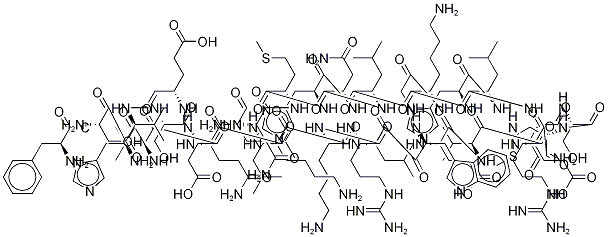
52232-67-4
- Product Name:Teriparatide acetate
- Molecular Formula:C172H278N52O47S2
- Purity:99%
- Molecular Weight:3890.49792
Product Details:
CasNo: 52232-67-4
Molecular Formula: C172H278N52O47S2
Appearance: White to Off-White Powder
Delivery Time: Prompt from stock
Packing: Aluminum bag
Throughput: 10KG/Month
Purity: 99%
1. Basic Product Information
- Generic Name: Teriparatide Acetate
- Chemical Category: Synthetic recombinant human parathyroid hormone fragment (1-34 amino acids), bone anabolic agent
- CAS Number: 52232-67-4
- Molecular Formula: C181H291N55O51S2⋅xC2H4O2
- Molecular Weight: 4117.70 (free base form); slight variation based on acetate salt content
- Physical and Chemical Properties: White to off-white lyophilized powder; freely soluble in water and dilute acetic acid solution, slightly soluble in ethanol. Stable under sealed, refrigerated conditions (2∘C–8∘C); protect from light and avoid repeated freezing and thawing to prevent protein degradation. The reconstituted solution is clear and colorless, and should be used within 28 days if stored at 2∘C–8∘C after reconstitution.
2. Pharmacological Mechanism
Teriparatide acetate is a parathyroid hormone (PTH) analog that exerts dual effects on bone metabolism by binding to PTH1 receptors on osteoblasts and osteocytes, with a predominant bone anabolic (formation-promoting) effect at therapeutic doses:
- Stimulating bone formation: Activates osteoblasts to promote collagen synthesis and bone matrix deposition, increasing bone mineral density (BMD) and improving bone microarchitecture.
- Modulating bone resorption: At low, intermittent doses, it inhibits osteoclast activity and reduces bone resorption; continuous high-dose administration may enhance resorption, which is why the drug is administered intermittently clinically.
- Enhancing calcium homeostasis: Promotes calcium absorption from the intestines and calcium reabsorption in the kidneys, maintaining normal serum calcium levels, which is essential for bone mineralization.
3. Indications
- Postmenopausal Osteoporosis in Women: Indicated for the treatment of postmenopausal women with high risk of osteoporotic fractures (e.g., history of fragility fractures, severe osteoporosis with low BMD). It reduces the risk of vertebral and non-vertebral fractures.
- Glucocorticoid-induced Osteoporosis (GIO): Used for the prevention and treatment of osteoporosis in men and women receiving long-term glucocorticoid therapy (≥ 7.5 mg prednisone daily for ≥ 3 months), who are at high risk of fractures.
- Osteoporosis in Men: Indicated for men with primary or hypogonadal osteoporosis and high fracture risk, when other treatments are ineffective or intolerable.
4. Administration and Dosage
4.1 Administration Route
- Subcutaneous injection: The only recommended route, administered in the thigh or abdominal wall. Do not inject intramuscularly or intravenously to avoid local irritation or systemic adverse reactions.
- Preparation: Use the dedicated pre-filled pen for subcutaneous injection; do not dilute or mix with other drugs. The pre-filled pen should be stored in the refrigerator before first use and can be kept at room temperature (≤25∘C) for up to 28 days after first use.
4.2 Recommended Dosage Regimen
- Standard dose for all indications: A fixed dose of 20 μg administered subcutaneously once daily, regardless of age, gender, or renal function status.
- Treatment duration: The maximum recommended course of treatment is 24 months in a lifetime. Re-treatment with teriparatide is not recommended, as long-term use may increase the risk of osteosarcoma.
- Special populations:
- Renal impairment: No dosage adjustment is required for patients with mild to moderate renal insufficiency; safety data for severe renal failure are limited, and cautious use is recommended.
- Hepatic impairment: No dosage adjustment is needed for patients with mild to moderate hepatic dysfunction.
- Elderly patients: No dose adjustment is required, but monitor serum calcium levels regularly in patients over 75 years old.
5. Contraindications and Precautions
5.1 Contraindications
- Hypersensitivity to teriparatide acetate, recombinant human PTH products, or any excipients in the formulation.
- History of osteosarcoma or other bone malignancies.
- Metabolic bone diseases (e.g., Paget’s disease of bone, hypercalcemia, hyperparathyroidism).
- Patients with open epiphyses (pediatric and adolescent patients, as the drug may affect bone growth and increase osteosarcoma risk).
- Pregnancy and lactation (may cause hypercalcemia in the fetus/infant; safety data are insufficient).
5.2 Precautions
- Osteosarcoma Risk Monitoring: Long-term animal studies have shown an increased risk of osteosarcoma with high-dose, prolonged teriparatide exposure. Avoid use in patients with risk factors for osteosarcoma (e.g., Paget’s disease, radiation therapy to the skeleton, hereditary bone disorders).
- Serum Calcium Monitoring: Measure serum calcium levels before treatment initiation and periodically during treatment. The drug may cause transient hypercalcemia, especially in patients with impaired renal function. Discontinue use if persistent hypercalcemia occurs.
- Urinary Calcium Excretion Monitoring: Increased urinary calcium excretion may lead to nephrolithiasis. Advise patients to maintain adequate fluid intake (≥ 2 L daily) to reduce the risk of kidney stone formation.
- Drug Interactions:
- Concurrent use with thiazide diuretics may increase serum calcium levels by reducing urinary calcium excretion; monitor calcium levels closely.
- Avoid use with bisphosphonates, as bisphosphonates may blunt the bone anabolic effect of teriparatide. A washout period of several months is recommended when switching between the two classes of drugs.
- Musculoskeletal Pain Management: Mild to moderate musculoskeletal pain (e.g., back pain, joint pain) is common during the initial treatment phase. Pain usually resolves spontaneously; if severe, adjust the injection site or reduce the dose temporarily.
6. Adverse Reactions
6.1 Common Adverse Reactions (incidence > 10%)
- Musculoskeletal system: Back pain, joint pain, limb pain, muscle cramps.
- Gastrointestinal system: Nausea, vomiting, abdominal pain, constipation.
- Nervous system: Headache, dizziness, insomnia.
- Local reactions: Pain, redness, swelling, or itching at the injection site; these symptoms are mild and transient, resolving within 24–48 hours without treatment.
6.2 Rare Adverse Reactions (incidence < 1%)
- Metabolic disorders: Transient hypercalcemia, hypercalciuria, nephrolithiasis.
- Cardiovascular system: Palpitations, hypertension, chest pain (rare, usually in patients with underlying heart disease).
- Allergic reactions: Urticaria, angioedema, anaphylactic shock (extremely rare, requires immediate medical intervention).
- Oncological risk: Osteosarcoma (reported in animal studies; no confirmed cases in humans with short-term use within the 24-month limit).
7. Product Advantages and Market Application
7.1 Clinical Superiority
- Bone anabolic effect: Unlike antiresorptive drugs (e.g., bisphosphonates, denosumab) that only slow bone loss, teriparatide actively promotes bone formation, making it ideal for patients with severe osteoporosis or a history of fragility fractures.
- Rapid onset of action: Significant increases in lumbar spine BMD can be observed within 6 months of treatment, with maximal effects achieved at 18–24 months.
- Broad patient applicability: Effective for postmenopausal women, men, and glucocorticoid-induced osteoporosis patients.
7.2 Market Demand
- Osteoporosis treatment market: A key drug in the global osteoporosis market, driven by the aging population and increasing awareness of fracture prevention. High demand in developed markets (US, EU, Japan) and growing demand in emerging markets (China, India, Brazil) with improving healthcare access.
- Regulatory Status: Approved by major regulatory authorities including FDA (US), EMA (EU), NMPA (China), and PMDA (Japan); included in clinical guidelines for osteoporosis treatment in many countries. Classified as a prescription-only drug due to the risk of osteosarcoma with long-term use.
8. Storage and Shelf Life
- Pre-use Storage: Store the unopened pre-filled pen or lyophilized powder in a sealed container at 2∘C–8∘C, protected from light. Do not freeze.
- Post-first-use Storage: After the first use, the pre-filled pen can be stored at room temperature (≤25∘C) for up to 28 days, away from heat and direct sunlight. Do not return the used pen to the refrigerator.
- Shelf Life: 36 months from the date of manufacture for unopened products; 28 days after first use for the pre-filled pen.
- Post-reconstitution Stability: For lyophilized powder, the reconstituted solution is stable for 28 days when stored at 2∘C–8∘C. Discard any unused solution after this period.
Relevant Products
-
 Sparsentan
CAS:254740-64-2
-
-
 Cagrilintide
CAS:1415456-99-3


