
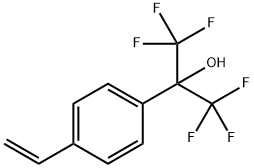
2386-82-5
- Product Name:4‑HFA‑ST
- Molecular Formula:C11H8F6O
- Purity:99%
- Molecular Weight:270.17
Product Details:
CasNo: 2386-82-5
Molecular Formula: C11H8F6O
Appearance: Colorless transparent liquid
Packing: Bottle
Throughput: 100KG/Month
Purity: 99%
1,1,1,3,3,3-Hexafluoro-2-(4-vinylphenyl)-propan-2-ol (CAS No. 2386-82-5, abbreviated as 4‑HFA‑ST) is mainly used in fluorine-containing functional polymers and microelectronic materials, especially in semiconductor photoresists and UV curing systems. Below is a detailed breakdown of its applications by scenario:
Core Applications (By Scenario)
-
Key Monomer for Semiconductor Photoresists
- As a functional vinyl monomer, it is used to synthesize fluorine-containing photoresist resins (e.g., acrylate and styrene copolymers). The introduction of the hexafluoroisopropanol group enhances the hydrophobicity, transparency, and etching selectivity of the resin, making it suitable for advanced lithography processes such as deep ultraviolet (DUV) lithography and meeting the requirements for fabricating fine circuits on wafers.
- It can be used to prepare anti-reflective coating (ARC) materials, which reduce light reflection interference during lithography and improve pattern transfer accuracy.
-
UV Curing Materials & Inks
- It is utilized in synthesizing UV-curable resins and reactive diluents, endowing coatings/inks with low surface energy, weather resistance, and chemical resistance, which are applicable in high-end printing, electronic component packaging, and other scenarios.
- Serves as a modified monomer to improve the adhesion and crosslinking efficiency of UV curing systems, suitable for manufacturing printed circuit boards (PCBs), optical films, and other products.
-
Synthesis of Other Fluorine-Containing Polymers
- Used to produce fluorine-containing elastomers and resins for special coatings. Its fluorine-containing structure enhances the high/low temperature resistance and aging resistance of materials, applicable in high-end industrial fields such as aerospace and automotive manufacturing.
- Acts as an intermediate in organic synthesis, used to prepare derivatized functional compounds through esterification, etherification, and other reactions, which are further applied in fine chemical engineering and new material R&D.
Key Properties Supporting the Applications
| Properties | Supporting Effects |
|---|---|
| Polymerizable vinyl group | Facilitates free-radical polymerization to construct polymer backbones |
| Hexafluoroisopropanol (HFIP) structure | Improves the hydrophobicity, chemical stability, and lithography etching compatibility of materials |
| Colorless transparent liquid form | Enables easy mixing with other monomers/resins, suitable for industrial-scale production |
Typical Application Examples (For Material R&D and Production)
- Photoresist Formulation: Copolymerized with methacrylates, maleic anhydride, etc., to prepare high-resolution negative/positive photoresists.
- UV Inks: Applied in environment-friendly UV-curable inks for food packaging, electronic labels, etc., to enhance scratch and solvent resistance.
Relevant Products
-
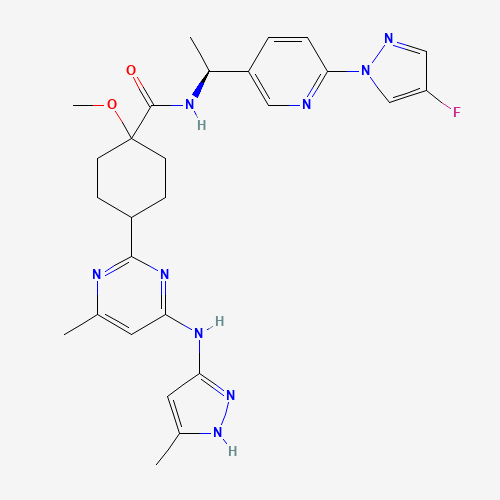 Pralsetinib
CAS:2097132-94-8
-
 BPC 157 Lyophilized Powder
CAS:137525-51-0
-
 Cardiogen Lyophilized Powder
CAS:406-76-8


