
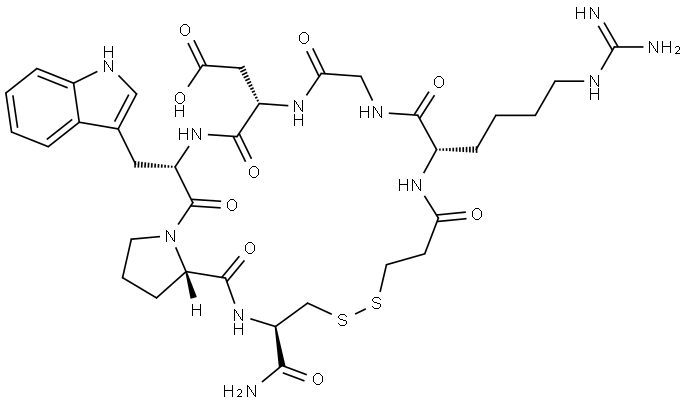
188627-80-7
- Product Name:Eptifibatide
- Molecular Formula:C35H49N11O9S2
- Purity:99%
- Molecular Weight:831.97
Product Details:
CasNo: 188627-80-7
Molecular Formula: C35H49N11O9S2
Appearance: White to almost White Powder
Packing: Bottle
Throughput: 100KG/Month
Purity: 99%
1. Basic Product Information
- Generic Name: Eptifibatide
- Chemical Category: Synthetic cyclic heptapeptide, glycoprotein IIb/IIIa receptor antagonist
- CAS Number: 188627-80-7
- Molecular Formula: C35H49N11O9S2
- Molecular Weight: 832.0
- Physical and Chemical Properties: White to off-white lyophilized powder; freely soluble in water and normal saline, insoluble in organic solvents such as ethanol and acetone. Stable under sealed, refrigerated conditions (2∘C–8∘C); protect from light and avoid repeated freezing and thawing. The reconstituted solution is clear and colorless, and should be used within 24 hours when stored at room temperature, or 7 days if refrigerated.
2. Pharmacological Mechanism
Eptifibatide exerts its antiplatelet effect by selectively and reversibly binding to the glycoprotein (GP) IIb/IIIa receptor on the surface of activated platelets. Its core mechanisms include:
- Blocking platelet aggregation: The GP IIb/IIIa receptor is the final common pathway for platelet aggregation. Eptifibatide binds to this receptor, preventing the binding of fibrinogen, von Willebrand factor, and other adhesive molecules to platelets, thus inhibiting platelet cross-linking and aggregation.
- Rapid onset and reversible action: The drug takes effect within minutes after intravenous administration, and its antiplatelet effect decreases rapidly after drug withdrawal, with platelet function returning to normal within 4–8 hours, which reduces the risk of bleeding complications.
- No effect on platelet activation: Unlike aspirin or clopidogrel, eptifibatide does not affect platelet activation pathways (e.g., ADP, thromboxane A2), but directly blocks the aggregation process, making it a potent antiplatelet agent for acute thrombotic events.
3. Indications
- Acute Coronary Syndrome (ACS): Used for patients with unstable angina pectoris or non-ST-segment elevation myocardial infarction (NSTEMI), either alone or in combination with aspirin and heparin, to reduce the risk of myocardial infarction, recurrent ischemia, and revascularization procedures.
- Percutaneous Coronary Intervention (PCI): Administered to patients undergoing coronary stent implantation or balloon angioplasty, to prevent acute stent thrombosis and reduce ischemic complications during and after the procedure.
- ST-segment Elevation Myocardial Infarction (STEMI): Off-label use in combination with thrombolytic drugs or primary PCI, to improve myocardial reperfusion and reduce the incidence of adverse cardiovascular events.
4. Administration and Dosage
4.1 Administration Route
- Intravenous injection + continuous intravenous infusion: The only recommended administration route; not for intramuscular or subcutaneous injection due to the risk of local bleeding and poor absorption.
4.2 Recommended Dosage Regimen
4.2.1 For ACS (Non-PCI Patients)
- Loading dose: 180 μg/kg body weight, administered intravenously over 1–2 minutes.
- Maintenance dose: 2.0 μg/kg per minute, continuous intravenous infusion for up to 72 hours, or until the patient undergoes revascularization surgery.
4.2.2 For PCI Patients
- Loading dose: 180 μg/kg body weight, given 10–60 minutes before the procedure, or at the time of balloon inflation.
- Maintenance dose: 2.0 μg/kg per minute, continued for 12–24 hours after the procedure; the maximum duration of infusion is 96 hours.
4.2.3 Special Populations
- Renal impairment: For patients with creatinine clearance (CrCl) of 30–50 mL/min, reduce the maintenance dose to 1.0 μg/kg per minute; contraindicated in patients with CrCl < 30 mL/min (risk of severe bleeding).
- Elderly patients: No dosage adjustment is required for patients over 65 years old, but closely monitor for bleeding signs.
- Pediatric patients: Safety and efficacy have not been established; not recommended for use in children.
5. Contraindications and Precautions
5.1 Contraindications
- Hypersensitivity to eptifibatide or any excipients in the formulation.
- Severe bleeding disorders (e.g., hemophilia, thrombocytopenic purpura).
- Active internal bleeding (e.g., gastrointestinal bleeding, intracranial hemorrhage) within the past 30 days.
- History of intracranial hemorrhage, stroke, or transient ischemic attack (TIA) within the past 6 months.
- Renal failure requiring hemodialysis (CrCl < 30 mL/min).
- Major surgery or trauma within the past 6 weeks.
- Thrombocytopenia (platelet count < 100,000/mm³).
5.2 Precautions
- Bleeding Risk Monitoring: The most common adverse reaction is bleeding. Monitor closely for signs of bleeding, including hematuria, hematemesis, melena, ecchymosis, and hypotension. Discontinue the drug immediately if severe bleeding occurs.
- Platelet Count Monitoring: Check platelet counts before administration, 2–6 hours after the loading dose, and daily during infusion. If platelet count drops below 50,000/mm³, discontinue use and consider platelet transfusion.
- Drug Interaction Caution:
- Concurrent use with anticoagulants (heparin, warfarin) or other antiplatelet drugs (aspirin, clopidogrel) significantly increases bleeding risk; adjust doses of concomitant drugs and monitor coagulation indicators (activated partial thromboplastin time, APTT).
- Avoid use with thrombolytic drugs in patients with high bleeding risk.
- Renal Function Monitoring: For patients with moderate renal impairment, monitor serum creatinine and creatinine clearance regularly to adjust the maintenance dose.
- Pregnancy and Lactation: Safety data are limited; use only when the potential benefit outweighs the risk to the fetus or infant. Breastfeeding is not recommended during treatment.
6. Adverse Reactions
6.1 Common Adverse Reactions (incidence > 10%)
- Bleeding-related: Minor bleeding (ecchymosis, epistaxis, gingival bleeding), major bleeding (gastrointestinal bleeding, retroperitoneal bleeding, intracranial hemorrhage).
- Hematological: Thrombocytopenia (immune-mediated or non-immune-mediated).
- Cardiovascular: Hypotension (transient, usually related to bleeding), bradycardia.
- Local reactions: Pain, redness, or hematoma at the intravenous infusion site.
6.2 Rare Adverse Reactions (incidence < 1%)
- Allergic reactions: Urticaria, pruritus, anaphylactic shock (extremely rare).
- Hematological: Severe thrombocytopenia (platelet count < 20,000/mm³), requiring emergency treatment.
- Others: Headache, nausea, vomiting, dizziness, fever.
7. Product Advantages and Market Application
7.1 Clinical Superiority
- High specificity: Targets the final common pathway of platelet aggregation, with stronger antiplatelet efficacy than oral antiplatelet drugs.
- Reversible effect: Platelet function recovers quickly after drug withdrawal, reducing the risk of prolonged bleeding compared to other GP IIb/IIIa receptor antagonists (e.g., abciximab).
- Convenient dosing: Fixed weight-based dosage, no need for immune monitoring (unlike abciximab).
7.2 Market Demand
- Acute coronary syndrome market: A key drug in the management of ACS and PCI procedures, widely used in hospitals and cardiac care units globally.
- Regional demand: High demand in developed markets (US, EU, Japan) due to high incidence of cardiovascular diseases; growing demand in emerging markets (China, India, Brazil) with improving medical infrastructure.
- Regulatory Status: Approved by major regulatory authorities including FDA (US), EMA (EU), and NMPA (China); included in clinical guidelines for ACS and PCI in many countries.
8. Storage and Shelf Life
- Storage Conditions: Store the lyophilized powder in a sealed container at 2∘C–8∘C, protected from light and moisture. Do not freeze.
- Shelf Life: 24 months from the date of manufacture under recommended storage conditions.
- Post-reconstitution Stability: The reconstituted solution is stable for 24 hours at room temperature (15∘C–25∘C) or 7 days at 2∘C–8∘C. Do not use if the solution becomes turbid or discolored.
Relevant Products
-
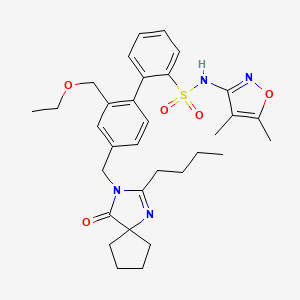 Sparsentan
CAS:254740-64-2
-
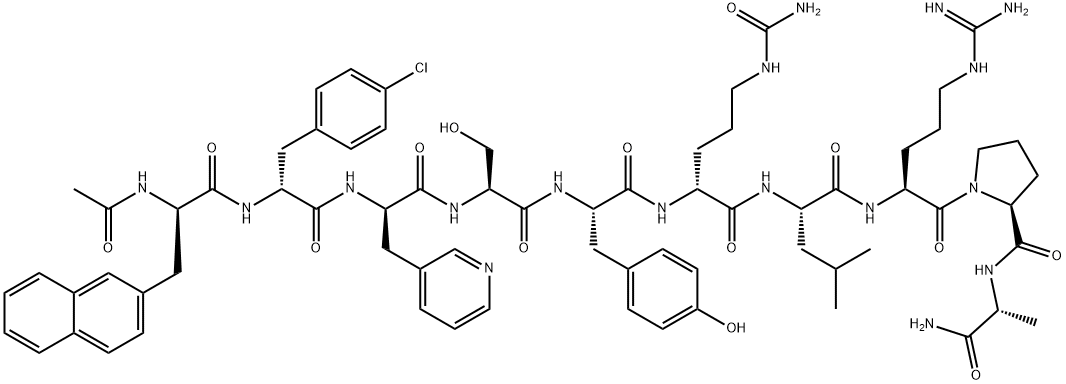 Cetrorelix acetate
CAS:120287-85-6
-
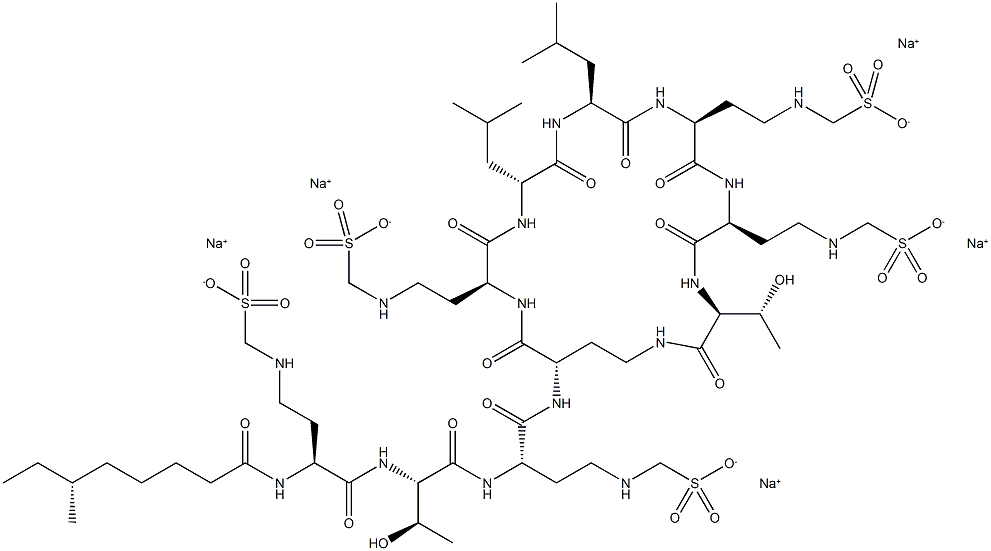 Colistin sodium methanesulfonate
CAS:8068-28-8


