
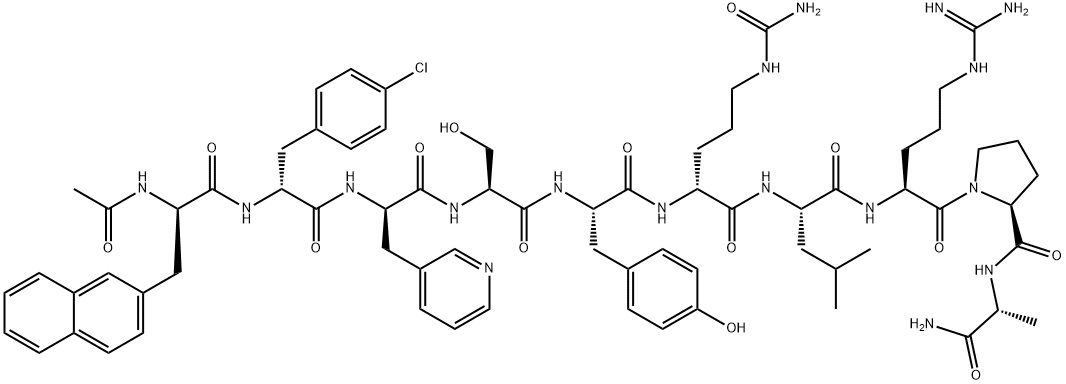
120287-85-6
- Product Name:Cetrorelix acetate
- Molecular Formula:C70H92ClN17O14
- Purity:99%
- Molecular Weight:1431.04
Product Details:
CasNo: 120287-85-6
Molecular Formula: C70H92ClN17O14
Appearance: White to almost White Powder
Packing: Bottle
Throughput: 100KG/Month
Purity: 99%
1. Basic Product Information
- Generic Name: Cetrorelix Acetate
- Chemical Category: Synthetic non-peptide gonadotropin-releasing hormone (GnRH) antagonist
- CAS Number: 120287-85-6
- Molecular Formula: C70H92ClN17O14⋅xC2H4O2
- Molecular Weight: 1431.06 (free base form); slight variation depending on acetate salt content
- Physical and Chemical Properties: White to off-white lyophilized powder; soluble in water and physiological saline; slightly soluble in methanol. It is stable under sealed, refrigerated conditions (2∘C–8∘C) and must be protected from light and moisture to prevent degradation. The reconstituted solution should be used within 24 hours if stored at room temperature, or 72 hours if refrigerated.
2. Pharmacological Mechanism
Cetrorelix acetate exerts its therapeutic effect by competitively binding to GnRH receptors in the anterior pituitary gland, without receptor agonist activity. Its core mechanisms include:
- Rapid inhibition of gonadotropin secretion: Unlike GnRH agonists that cause an initial "flare-up" of hormone secretion, cetrorelix directly blocks GnRH receptors, immediately inhibiting the release of luteinizing hormone (LH) and follicle-stimulating hormone (FSH).
- Suppression of sex steroid production: Reduced LH and FSH levels lead to a rapid decrease in estrogen (in females) and testosterone (in males) synthesis in the gonads.
- Reversible action: The inhibitory effect on hormone secretion is dose-dependent and fully reversible after drug withdrawal, with no long-term impact on pituitary-gonadal axis function.
3. Indications
3.1 Assisted Reproductive Technology (ART)
- Prevention of premature luteinization: The primary indication is for women undergoing controlled ovarian hyperstimulation (COH) in in vitro fertilization (IVF) or intracytoplasmic sperm injection (ICSI) cycles. It inhibits the premature surge of LH, which disrupts follicular maturation, thereby improving the quality of oocytes retrieved and increasing the pregnancy rate.
3.2 Endometriosis and Uterine Fibroids
- Off-label use: Used to relieve symptoms of moderate to severe endometriosis (e.g., pelvic pain, dysmenorrhea) and reduce the size of uterine fibroids by suppressing estrogen levels. This application requires short-term use to avoid long-term hypoestrogenic side effects.
3.3 Prostate Cancer
- Off-label use: In the treatment of advanced prostate cancer, it suppresses testosterone production to achieve androgen deprivation therapy (ADT), similar to GnRH agonists but without the initial testosterone flare-up that may exacerbate tumor growth.
4. Administration and Dosage
4.1 Administration Routes
- Subcutaneous injection: The preferred route, administered in the abdominal wall or thigh. Avoid intramuscular or intravenous injection to prevent local irritation or systemic adverse reactions.
- Preparation: Reconstitute the lyophilized powder with the provided solvent (physiological saline) immediately before use; gently swirl the vial to dissolve, do not shake vigorously.
4.2 Recommended Dosage Regimen
4.2.1 For ART Cycles (Prevention of Premature LH Surge)
- Fixed-dose protocol: Administer 0.25 mg subcutaneously once daily, starting on the 5th or 6th day of ovarian stimulation with gonadotropins, and continue until the day of human chorionic gonadotropin (hCG) administration.
- Single high-dose protocol: Administer a single 3 mg subcutaneous injection on the 7th day of ovarian stimulation. If hCG is not administered within 4 days, an additional 0.25 mg daily dose is required until hCG injection.
4.2.2 Special Populations
- Renal/hepatic impairment: No dosage adjustment is required for patients with mild to moderate renal or hepatic dysfunction; data for severe impairment is limited, and cautious use is recommended.
- Elderly patients: Not recommended for postmenopausal women; for elderly male patients with prostate cancer, start with the lowest effective dose and monitor hormone levels closely.
5. Contraindications and Precautions
5.1 Contraindications
- Hypersensitivity to cetrorelix acetate, GnRH analogs, or any excipients in the formulation.
- Pregnant or lactating women (may cause fetal harm or affect lactation).
- Women with primary ovarian failure or men with primary testicular failure.
- Severe renal or hepatic insufficiency (no sufficient safety data).
5.2 Precautions
- Hormone Level Monitoring: During ART cycles, monitor serum LH, estrogen, and progesterone levels regularly to adjust the timing of hCG administration and avoid over-suppression of follicular development.
- Ovarian Hyperstimulation Syndrome (OHSS) Risk: Although cetrorelix does not increase OHSS risk, it may occur in patients receiving high-dose gonadotropins. Monitor for symptoms such as abdominal distension, ascites, and oliguria; discontinue treatment if severe OHSS develops.
- Bone Mineral Density (BMD) Monitoring: Long-term use (more than 6 months) may reduce BMD due to hypoestrogenism. Avoid prolonged use in premenopausal women; supplement calcium and vitamin D if long-term treatment is necessary.
- Cardiovascular Risk: In male patients with prostate cancer, androgen deprivation may increase the risk of cardiovascular events (e.g., hypertension, dyslipidemia). Monitor blood pressure and lipid levels regularly.
- Drug Interactions: No significant interactions with common drugs have been reported; avoid concurrent use with other GnRH agonists or antagonists to prevent excessive hormone suppression.
6. Adverse Reactions
6.1 Common Adverse Reactions (incidence > 10%)
- Local reactions: Pain, redness, swelling, or itching at the injection site; these symptoms are mild and transient, resolving within 24–48 hours without treatment.
- Reproductive system: Ovarian cyst formation (transient, usually resolving after drug withdrawal), vaginal dryness (in women), decreased libido (in men).
- Gastrointestinal: Nausea, headache, fatigue; these are mild and self-limiting.
6.2 Rare Adverse Reactions (incidence < 5%)
- Hypoestrogenic/androgenic effects: Hot flashes, night sweats, mood swings, sleep disturbances, muscle weakness.
- Metabolic effects: Decreased bone mineral density (with long-term use), dyslipidemia.
- Allergic reactions: Urticaria, angioedema, anaphylactic shock (extremely rare, requires immediate medical intervention).
- Cardiovascular: Hypertension, palpitations (more common in elderly male patients).
7. Product Advantages and Market Application
7.1 Clinical Superiority
- Rapid onset of action: Directly blocks GnRH receptors without an initial hormone flare-up, which is particularly beneficial for ART cycles and prostate cancer treatment.
- Reversible effect: Hormone levels recover quickly after drug withdrawal, minimizing long-term side effects compared to GnRH agonists.
- Flexible dosing protocols: Offers both daily low-dose and single high-dose options, adapting to different ART treatment strategies and improving patient convenience.
7.2 Market Demand
- ART market: The primary application area, driven by the growing global demand for assisted reproductive technologies. It is widely used in IVF/ICSI cycles in developed countries (US, EU, Japan) and emerging markets (China, India, Brazil).
- Oncology and gynecology: Has niche applications in prostate cancer, endometriosis, and uterine fibroids, with increasing market penetration as clinicians recognize its advantages over GnRH agonists.
- Regulatory status: Approved by major regulatory authorities including FDA (US), EMA (EU), NMPA (China), and PMDA (Japan); classified as a Class B drug in many countries for ART indications.
8. Storage and Shelf Life
- Storage Conditions: Store the lyophilized powder in a sealed container at 2∘C–8∘C, protected from light and moisture. Do not freeze.
- Shelf Life: 36 months from the date of manufacture under recommended storage conditions.
- Post-reconstitution Stability: The reconstituted solution is stable for 24 hours at room temperature (15∘C–25∘C) or 72 hours at 2∘C–8∘C. Discard any unused solution beyond this period.
Relevant Products
-
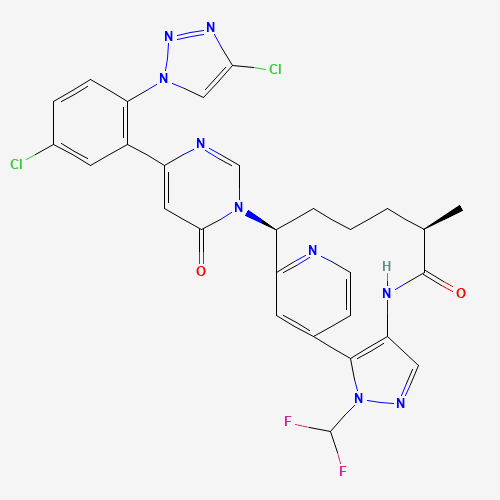 Milvexian
CAS:1802425-99-5
-
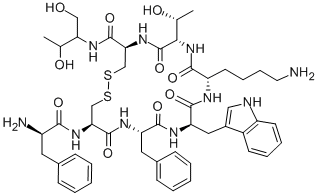 Octreotide acetate
CAS:83150-76-9
-
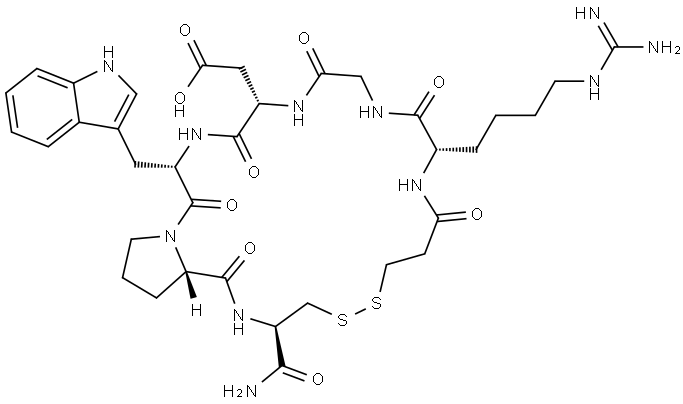 Eptifibatide
CAS:188627-80-7


