
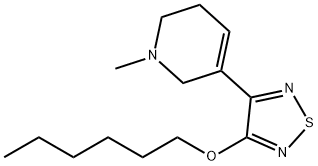
131986-45-3
- Product Name:Xanomeline
- Molecular Formula:C14H23N3OS
- Purity:99%
- Molecular Weight:281.42
Product Details:
CasNo: 131986-45-3
Molecular Formula: C14H23N3OS
Appearance: White to almost White Powder
Packing: Aluminium bag
Throughput: 100KG/Month
Purity: 99%
Brief Summary
Xanomeline (CAS 131986-45-3, LY-246708) is a functionally selective M₁/M₄ muscarinic acetylcholine receptor agonist. It crosses the blood-brain barrier and modulates central cholinergic, dopaminergic and glutamatergic pathways. It serves as the core active component of Cobenfy™ and is extensively used in preclinical research of Alzheimer’s disease, cognitive dysfunction and schizophrenia. For research use only.
Product Overview
Xanomeline (LY-246708) is a well-characterized, functionally selective muscarinic acetylcholine M₁/M₄ receptor agonist, originally discovered and developed by Eli Lilly for cognitive disorder research. It represents a landmark cholinergic modulator with a differentiated pharmacological profile, distinguished by preferential activation of central M₁ and M₄ muscarinic subtypes while exhibiting much weaker activity toward peripheral muscarinic receptors including M₂, M₃ and M₅. Unlike classic antipsychotics that primarily block dopamine D₂ receptors, xanomeline acts through a non-dopaminergic cholinergic pathway, opening a unique research direction for neuroscience and psychiatric drug discovery.
Mechanism of Action
Xanomeline readily crosses the blood‑brain barrier and binds to orthosteric sites of central M₁ and M₄ muscarinic receptors. Activation of cortical M₁ receptors potentiates glutamatergic NMDA signaling, enhances synaptic plasticity and supports cognitive functions such as learning, memory, attention and sensory gating. Stimulation of striatal M₄ receptors negatively modulates presynaptic mesolimbic dopamine release, which contributes to the attenuation of positive psychotic symptoms. This dual-target profile simultaneously regulates dopaminergic and glutamatergic neuronal circuits in the brain, addressing multiple pathological features of neuropsychiatric diseases. It also displays secondary activity on selected serotonin receptors, further enriching its complex neuropharmacological signature.
Research Background
Xanomeline was initially advanced for Alzheimer’s disease to ameliorate cholinergic deficits and cognitive decline. Early clinical observations revealed its unexpected beneficial effects on psychotic symptoms, which redirected major research interest toward schizophrenia. When combined with trospium chloride (a peripherally restricted muscarinic antagonist that cannot penetrate the central nervous system), xanomeline forms the fixed‑dose combination Cobenfy™ (formerly KarXT), the first-in-class muscarinic therapeutic approved by the FDA in 2024 for adult schizophrenia treatment, marking a paradigm shift away from traditional dopamine-targeted antipsychotics. As the core active moiety of this breakthrough therapy, xanomeline has become a high-value research compound widely adopted by academic labs and biotech R&D teams.
Research Applications
Our Xanomeline bulk material is supplied as a high-purity research compound to support diversified preclinical studies:
- Target validation and pharmacological profiling of M₁/M₄ muscarinic signaling
- In vitro receptor binding, functional assay and structure‑activity relationship (SAR) work
- In vivo animal model studies for Alzheimer’s disease, cognitive impairment and schizophrenia
- Lead discovery, route development and analytical method validation for muscarinic agonist drug programs
- Mechanism investigation of cholinergic‑dopaminergic‑glutamatergic circuit crosstalk
Product Statement & Disclaimer
This product is a fine chemical for research and laboratory use only. It is not an approved API, finished medicinal product or therapeutic agent, and is prohibited for human clinical administration, diagnosis or treatment. Customers are responsible for verifying suitability for their specific experimental design, complying with local regulatory requirements and adopting appropriate PPE and safe handling protocols during storage, testing and synthesis. All technical data provided is for reference only and does not constitute clinical or regulatory submission documentation.
Relevant Products
-
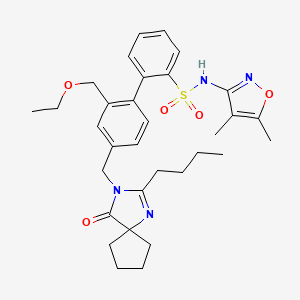 Sparsentan
CAS:254740-64-2
-
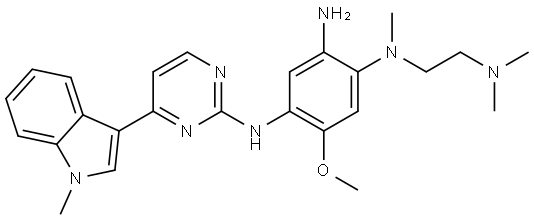 Mutated EGFR-IN-1(Osimertinib Intermediate)
CAS:1421372-66-8
-
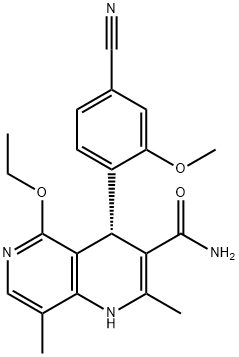 Finerenone
CAS:1050477-31-0


