
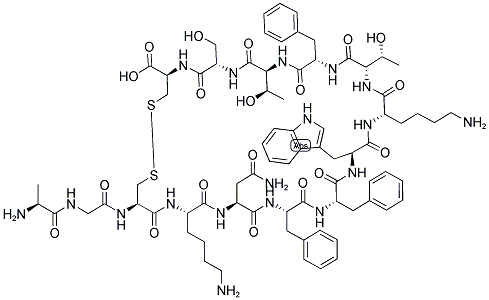
51110-01-1
- Product Name:Somatostatin
- Molecular Formula:C76H104N18O19S2
- Purity:99%
- Molecular Weight:1637.88
Product Details:
CasNo: 51110-01-1
Molecular Formula: C76H104N18O19S2
Appearance: White to almost White Powder
Packing: Aluminium bag
Throughput: 1000KG/Month
Purity: 99%
1. Basic Information
Generic Name: SomatostatinSynonym: Growth Hormone-Inhibiting Hormone (GHIH)CAS Number: 51110-01-1Molecular Formula: C76H104N18O19S2Molecular Weight: 1637.89Physical and Chemical Properties: Somatostatin is a cyclic polypeptide hormone consisting of 14 amino acids. It is a white to off-white powder, soluble in water and dilute acetic acid, and stable under refrigerated conditions.
2. Pharmacological Mechanism
Somatostatin exerts its biological effects by binding to specific G-protein-coupled receptors (SSTR1-SSTR5) distributed in various tissues and organs of the body. Its core functions include:
- Inhibiting the secretion of growth hormone, thyroid-stimulating hormone, and prolactin in the anterior pituitary gland.
- Suppressing the release of gastrointestinal hormones such as gastrin, cholecystokinin, and secretin, thereby reducing gastric acid secretion, intestinal peristalsis, and pancreatic exocrine function.
- Inhibiting the proliferation of certain tumor cells that overexpress somatostatin receptors, making it a key target for tumor targeted therapy.
3. Clinical Applications
- Treatment of Acute Pancreatitis: Somatostatin can significantly reduce pancreatic enzyme secretion, alleviate pancreatic tissue edema and inflammation, and is the first-line drug for the clinical treatment of severe acute pancreatitis.
- Management of Upper Gastrointestinal Bleeding: It constricts visceral blood vessels and reduces gastric acid secretion, which is effective in controlling bleeding caused by peptic ulcers, esophageal varices, and other factors.
- Treatment of Hormone-Secreting Tumors: For tumors such as acromegaly (caused by excessive growth hormone secretion) and gastroenteropancreatic neuroendocrine tumors, somatostatin analogs (e.g., octreotide) can inhibit tumor hormone secretion and slow tumor growth.
- Prevention of Pancreatic Fistula: It is used perioperatively in pancreatic surgery to reduce pancreatic exocrine function and lower the incidence of postoperative pancreatic fistula.
4. Administration and Dosage
- Administration Route: Intravenous injection or continuous intravenous infusion; the drug cannot be administered intramuscularly or subcutaneously due to its short half-life.
- Half-Life: The endogenous somatostatin half-life is only 1-3 minutes. For long-term clinical use, long-acting analogs are preferred.
- Dosage Regimen: The dosage is adjusted according to the specific indication and patient condition. For example, in the treatment of acute pancreatitis, a continuous intravenous infusion of 250 μg/h is usually recommended, with the course of treatment depending on the patient's clinical response.
5. Adverse Reactions and Precautions
- Common Adverse Reactions: Nausea, vomiting, abdominal pain, bloating, and diarrhea, which are usually mild and transient, and can be relieved by reducing the dosage or slowing the infusion rate.
- Rare Adverse Reactions: Hypoglycemia or hyperglycemia (due to the inhibition of insulin and glucagon secretion), bradycardia, and hypotension.
- Precautions:
- Contraindicated in patients with hypersensitivity to somatostatin or its excipients.
- Use with caution in patients with diabetes mellitus, as it may affect blood glucose control and require close monitoring of blood glucose levels.
- During pregnancy and lactation, the drug should be used only when the potential benefits outweigh the potential risks to the fetus or infant.
6. Product Advantages and Market Prospects
Somatostatin and its analogs are irreplaceable in the treatment of pancreatic diseases and neuroendocrine tumors. With the increasing incidence of related diseases globally, the market demand for somatostatin products is steadily growing. In addition, the development of long-acting sustained-release formulations has further improved patient compliance and expanded the clinical application scenarios of the drug.
Relevant Products
-
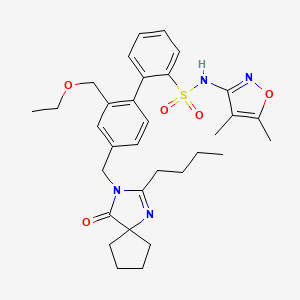 Sparsentan
CAS:254740-64-2
-
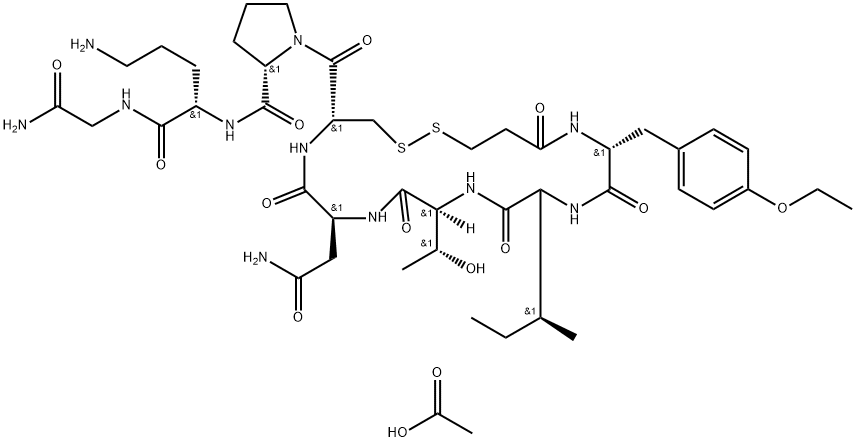 Atosiban Acetate
CAS:914453-95-5
-
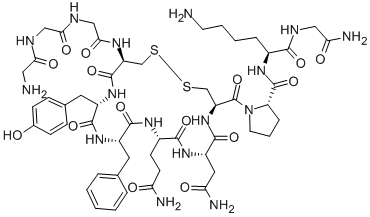 Terlipressin acetate
CAS:14636-12-5


