
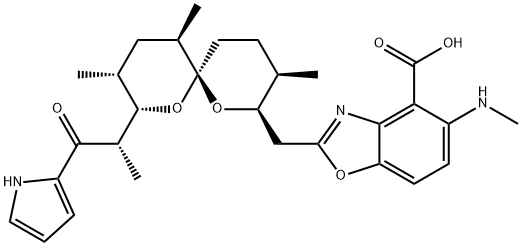
52665-69-7
- Product Name:Calcimycin
- Molecular Formula:C29H37N3O6
- Purity:99%
- Molecular Weight:523.62
Product Details:
CasNo: 52665-69-7
Molecular Formula: C29H37N3O6
Appearance: White to light yellow to light orange Powder
Delivery Time: 2 weeks after order
Packing: Aluminium bag
Throughput: 10000KG/Month
Purity: 99%
Calcimycin (CAS: 52665-69-7; Synonyms: A23187, Calcium Ionophore, Antibiotic A23187) is a carboxylic acid antibiotic and divalent cation ionophore naturally isolated from the fermentation broth of Streptomyces chartreusensis. It is widely applied in biochemistry, cell biology, and pharmaceutical R&D for its unique ability to transport Ca²⁺, Mg²⁺, and Mn²⁺ across biological membranes. Below is a comprehensive product overview:
1. Mechanism of Action
Calcimycin is a mobile divalent cation ionophore with a distinct selectivity order: Mn²⁺ > Ca²⁺ ≈ Mg²⁺ > Sr²⁺ > Ba²⁺. Its structure forms a hydrophobic exterior and a polar cavity that coordinates divalent cations via carbonyl and hydroxyl groups. This cation - ionophore complex diffuses across lipid bilayers, equalizing intracellular and extracellular cation concentrations. It also uncouples mitochondrial oxidative phosphorylation and inhibits ATPase activity, disrupting cellular energy metabolism and triggering Ca²⁺ - dependent apoptosis.
2. Key Biological Activities & Applications
- Cell Biology Research: Gold - standard tool for manipulating intracellular Ca²⁺ levels to study Ca²⁺ - mediated signaling, autophagy, and apoptosis; used in calibrating fluorescent Ca²⁺/Mg²⁺ indicators and patch - clamp experiments.
- Antimicrobial Activity: Inhibits Gram - positive bacteria (e.g., Staphylococcus aureus) and some fungi; induces mycobacterial killing via Ca²⁺ - regulated autophagy.
- Biomedical R&D: Induces oocyte activation for assisted reproduction (ICSI); triggers ROS production and platelet fragmentation; investigated for anticancer (apoptosis induction) and anti - parasitic activity.
- Analytical Chemistry: Used in ion - selective electrode development for divalent cation detection.
3. Safety & Handling
- Toxicity: Cytotoxic; avoid inhalation, skin contact, or ingestion. It may cause eye/skin irritation and acute toxicity if exposed in large amounts.
- Storage: Store at - 20 °C in a desiccated, light - protected container; avoid repeated freeze - thaw cycles.
- Regulatory: For Research Use Only (RUO); not approved for human or veterinary therapeutic use.
4. Packaging & Documentation
- Standard packaging: 1 mg, 5 mg, 10 mg, 50 mg, 100 mg, 1 g, and custom bulk quantities.
- Supporting documents: COA, MSDS, HPLC purity report, and origin certificate (fermentation - derived from Streptomyces chartreusensis) available upon request.
Relevant Products
-
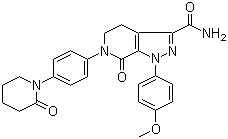 Apixaban
CAS:503612-47-3
-
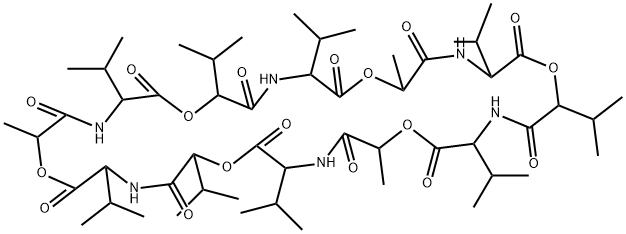 Valinomycin
CAS:2001-95-8
-
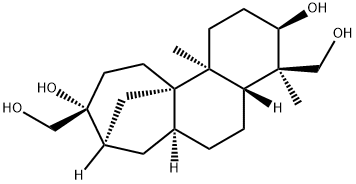 Aphidicolin
CAS:38966-21-1


